

A 2-piece DRD (Direct Resin Deposit) can production line is an advanced system used for manufacturing aluminum beverage cans. The term "DRD" refers to the method of depositing resin directly onto the can body, which is then used to form the can shape. The "2-piece" indicates that the can is assembled from two separate parts: a bottom and a top.
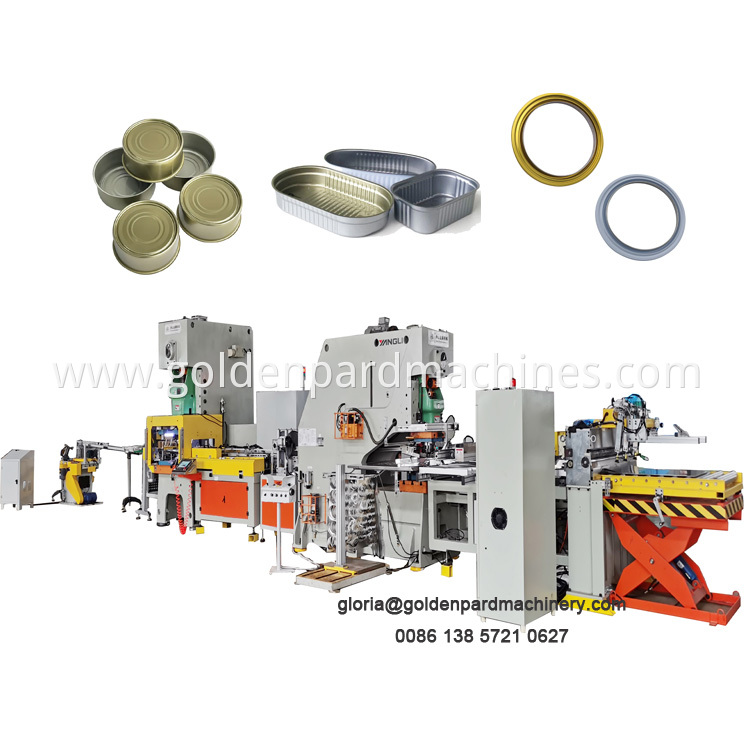
The production process typically involves the following steps:
1. **Can Body Preparation**: Aluminum strips or coils are fed into the machine where they are cut into can blanks, or bodies. These bodies are then formed into cylindrical shapes using a can forming machine.
2. **Resin Application**: In the DRD process, resin is applied directly to the inside surface of the can body. This resin serves as a bonding agent when the top is attached.
3. **Top Panel Formation**: The top panels are also made of aluminum and are formed into the desired shape. They include the pull-tab or ring-pull mechanism for opening the can.
4. **Assembly**: The bottom and top panels are then assembled together. The bottom panel is usually glued to the can body using the resin applied in step 2, and the top panel is secured with a sealant to create a hermetic seal.
5. **Sealing**: A sealing mechanism is used to attach the top panel to the bottom panel, ensuring airtightness and preventing leakage.
6. **Capping**: After assembly, the cans are capped with the appropriate closure (e.g., screw cap, flip-top, or pull-tab).
7. **Quality Control**: Throughout the process, quality control checks are performed to ensure that all cans meet the required standards for size, shape, and integrity.
8. **Packaging**: Finally, the cans are packaged for distribution.
The benefits of a 2-piece DRD can production line include higher efficiency, reduced material usage, and lower environmental impact compared to other can manufacturing methods. The resin application reduces the need for additional coatings or treatments on the can body, making the process more sustainable and potentially more cost-effective.